Showing posts with label trucking industry. Show all posts

Monday, April 13, 2015

Truck Stop History In The United States

Truck Stop History
Truck stops aren’t a new concept in American history. The history of truck stops dates further back into the 19th century when stagecoach relay stations presented a resting site for wagon drivers, horses as well as passengers. These passengers not only had the opportunity to stretch and relax, but also fill their stomachs. But with the invention of gas-fuelled vehicles by Henry Ford, this provided an avenue for an average American individual to own a car. As a result, there was a massive boost in the development and establishment of truckstops along the roads and highways.


Initially, service station owners presumed that their customers would be individuals who traveled by car, little did they know that their operations would open the doors to truck drivers and that would be their major source of earnings.

World War I gave a remarkable improvement to the trucking industry. Previously, trucks were too undersized to cart much in a single load and they just weren’t effective. Usually, they broke down and the truckers repaired these trucks by themselves. The war altered that, as trucks were considered necessary abroad, as well as at home to convey supplies to the rail stations.

World War II further heightened the need for truckers as the trucking industry persistently grew. Many trucks were powered with diesel fuel, thus generating the need for truck drivers as well as new merchandise for truck stops to put in the market.

The 1940s and 1950s witnessed the evolution of truck stops from a more ad hoc industry to one that was more cautiously designed specifically with the interest of long haul truckers at heart. In 1948, Fred Bosselman (who was a trucker and farmer) together with his wife, established the Bosselman and Eaton Truck Stop in Grand Island, Nebraska for business. In 1965, the Bosselman Truck Plaza, also known as the "Truck Stop of Tomorrow," opened its doors for business and was located on the new Interstate 80. This gave a foretaste about how the trucking industry would look in the years to come. Till date, the Bosselman truck stops are still open for business across the United States.

In 1956, President Dwight Eisenhower signed the Federal Interstate Highway Act which propelled the construction of 41,000 miles of new interstate roads. This led to a boost in the truck stop business.

Independent truck stops were sited along with the first chains, which were owned by the oil companies such as Amoco, Skelly, and Pure. As trucks became bigger, there was need to acquire more land mass in order to accommodate more trucks at the truck stops. This led to the epoch of multi-acre truck stop establishment and ownership.

In 1972, Truckstops of America (now recognized as TravelCenters of America) opened its first six locations. Also, Petro, as well as the Iron Skillet restaurant opened for operations around the same time.

In 1970, truck stops were referred to as travel plazas in order for it to appeal not only to the truckers, but also the general public at large. Today, the creation of travel plazas has not only made it possible to accommodate truckers, but also a mix of travelers. 

Monday, October 20, 2014

Advantages of Super Single Truck Tires

Super Single Truck Tires

One of the most interesting new trends in the commercial trucking industry may change the way we not only look at large rigs, but what we call them as well. The famed “18 wheeler” may become a “10 wheeler” thanks to super single truck tires.

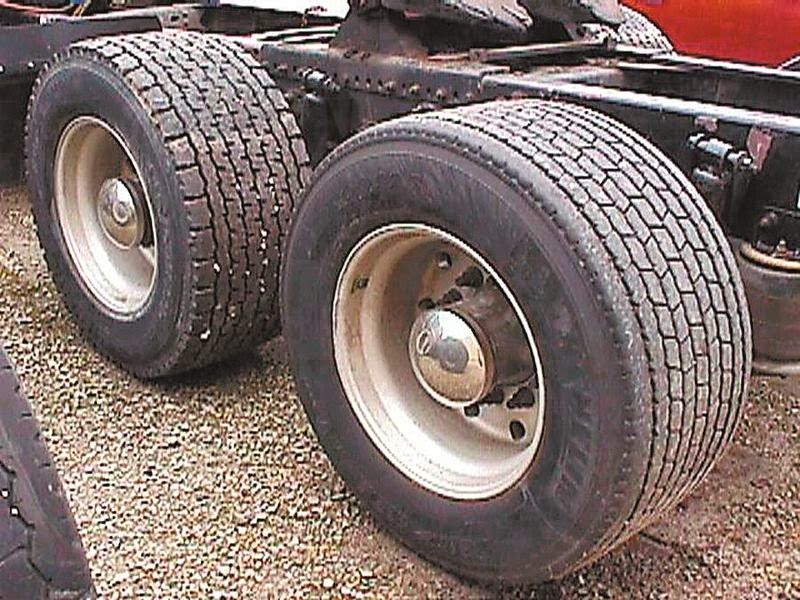
For many years, large trucks have used dual tires on each axle and four tires each on the trailer for a total of eight with the remaining ten tires on the truck itself. This was done to provide stability and security in case one of the tires blew out. However, the downside was the loss in fuel mileage because of the extra weight of the tires.

Thanks to the new super singles, the trucking industry may reap new benefits because of the advantages that these tires bring.

What are Super Singles?

Super single truck tires are essentially better constructed tires than the standard tires we see on rigs today. They offer aluminum wheels and are larger than their standard counterparts as well. These super singles are tougher, stronger and lighter in weight overall.

The Advantages of the New Tires

Essentially, instead of having eighteen tires to support the trailer and truck, only ten will be needed because of the improved design of the tire itself. The super single truck tires can withstand the weight of the trailer and vehicle over the same time period as their dual counterparts. A study performed by the Oak Ridge National Laboratory showed that trucks could save an average of almost 3% on gas or diesel fuel. While 3% may not sound like much, over 125,000 miles and averaging five miles per gallon that results in a savings of 728 gallons per year.

In addition, the new tires actually offer more stability with a wider truck frame. However, the most interesting advantages are that these tires can hold up for about 200,000 miles as opposed to the standard 160,000 miles for the conventional tires. This means that money is saved on replacement as well since the fewer number of super singles which actually last 40,000 miles longer.

However, the main advantage that super singles offer is that they are stronger, yet lighter in weight than their standard counterparts by roughly 1,000 pounds in total. While this weight savings may translate to better fuel mileage, trucking companies see this as being able to add 1,000 more pounds to the cargo. This means that more can be hauled on a single trip which can earn the company even more money than before.

With more payloads being placed on fewer tires, truck drivers will probably not notice much of a difference in terms of driving their rigs. However, there is one significant drawback to these tires that trucking companies will have to face. With eighteen wheels, if a truck blows out a tire in one of the dual mounted sections, it can limp into a service or repair station and get the tire changed. But, when one of the super single truck tires fails, the truck itself cannot be driven very far with the cargo in tow.


Changing a flat tire on the road with a heavy load without assistance is a tall order to say the least, so there may be higher repair costs in sending out a service truck to do the job. However, super singles are apparently here to stay. 

Monday, October 13, 2014

What You Can Do To Raise The Trucking Public Image

Raise The Trucking Public Image

What comes to mind when you think of the stereotypical trucker that roams your local Interstate day in and day out? If you are like most people, you have probably gathered a certain truck driver image in your head based on Hollywood movies that often promote the typical trucker as an uneducated, redneck who rarely showers. Sure enough, the work is never portrayed as very glamorous but how wrong this image can be when you get to know some real truckers from everyday life!

Worse yet, during the later half of the 20th century the reputation of the trucking industry and trucking public image started to wane as media stories of truckers started to convey them as typical, male chauvinists or even serial killers. It was certainly not helpful to the industry to learn about Robert Ben Rhoades, who held a full-fledged torture chamber in his truck in order to rape runaway teens that no one would have missed anyway.

In reality, most truckers do not fit any kind of stereotypical picture. Most truckers are truly easy going, nice, good hearted people, and are often more educated than many might believe. Yes, there are even doctors, lawyers and police officers who become top-notch truck drivers.


Suggestions for Improving The Typical Trucking Public Image

Sometimes, truckers are their own worst enemy. Little attention paid to personal grooming is among the worst culprits. While no one anticipates a trucker to look like a banker getting prepared for business meeting, there are small things some truckers can do to improve the overall truck driving image problem. Perhaps throwing on a fresh T-shirt and jeans from time to time while paying greater attention to personal hygiene and appearance.

Another thing that truckers can do is to turn off their CB radio! Part of the negative truck driving image stems from what is uttered out of the mouths of some drivers such as excessive swearing, gay bashing and general ignorance. By simply locating that on/off switch, it is possible to clean up those airwaves from picking up such annoyances that people would prefer not to hear.

While the state of a truck stop really falls into the responsibility of the management that occupies it, nevertheless the truckers themselves can do simple steps to avoid the stop from smelling entirely like an outdoor toilet. On the other hand, truck stops should also work harder to remove waste on a normal schedule. It is not fun to walk across a parking lot full of rotting food and other waste material that hasn’t been picked up.


Improving Driving Habits

The overall trucking public image could be greatly improved if truckers also implanted more courteous driving habits. Sometimes truckers are in a rush to get a job done and can put other drivers in very dangerous situations.

Other times, programs should be set in place, as it is the other drivers on the road that put truckers in dangerous situations. For example, truck drivers would prefer that cars pass them or back off with clear intentions of what they want to do rather than driving alongside for too long.